
In today’s fragmented digital landscape, your ideal customers aren’t just scrolling through Instagram or checking email—they’re moving fluidly between platforms, devices, and physical spaces throughout their buying journey. As a marketing director with two decades of experience in the digital marketing industry, I’ve watched the evolution from single-channel campaigns to today’s complex multi-channel ecosystem. The sobering truth? Brands that fail to implement an integrated multi-channel approach don’t just lose visibility—they lose customers to competitors who meet consumers where they are.
Your audience isn’t parked in one place. They’re scrolling TikTok during their morning commute, checking email at work, browsing Amazon during lunch, and watching YouTube after dinner—all while receiving targeted SMS promotions from brands they’ve engaged with. This isn’t just a trend; it’s how modern consumers operate. According to Twilio’s 2023 Global Messaging Engagement Report, a staggering 95% of US consumers actually want to receive email from brands they’re interested in, while 89% welcome SMS communications. Yet too many businesses still treat channels as siloed initiatives rather than parts of a cohesive system.
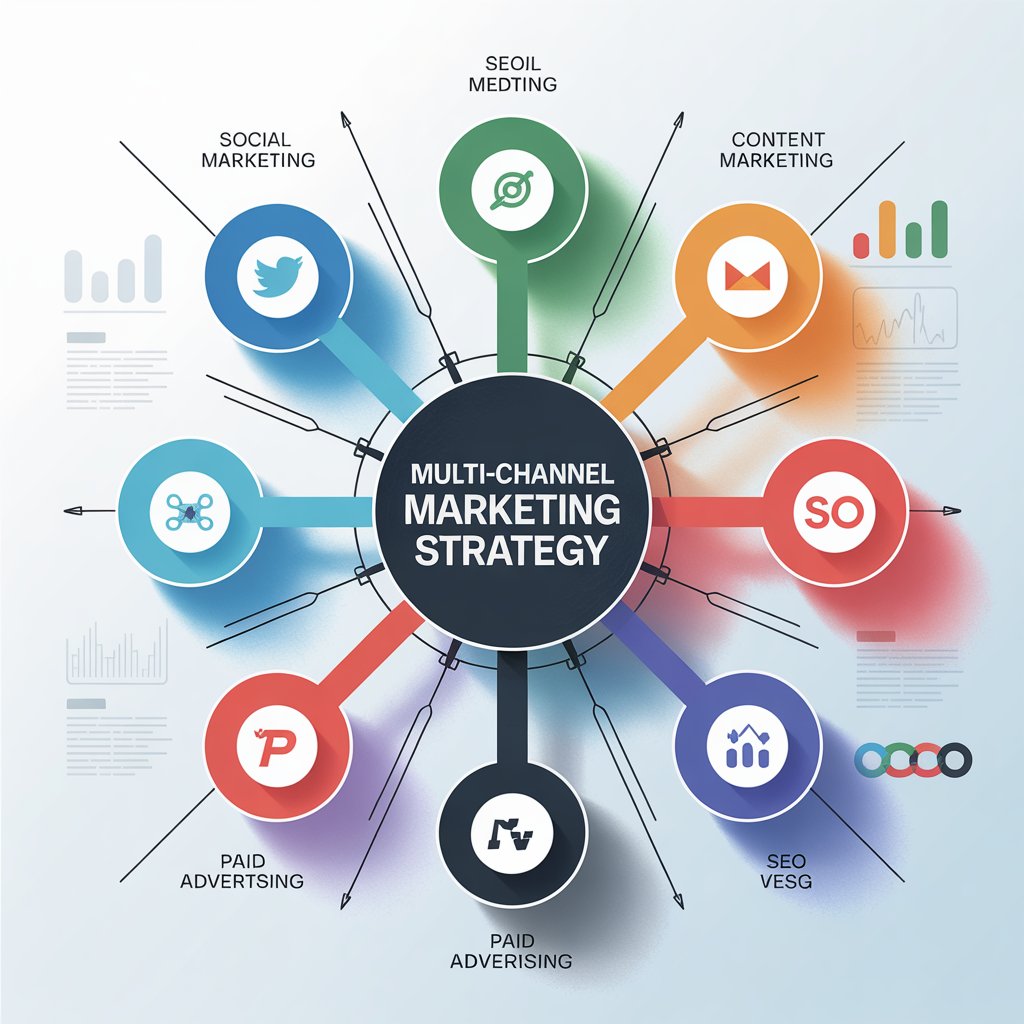
What is Multi-Channel Marketing (and Why It’s Different Than You Think)
Multi-channel marketing refers to the strategic use of multiple communication channels—both digital and physical—to engage with your target audience throughout their customer journey. Unlike single-channel approaches that limit your reach, a multi-channel strategy acknowledges that modern consumers interact with brands across various touchpoints before making purchasing decisions.
Key channel categories include:
- Digital channels: Email, SMS/MMS, social media (Facebook, Instagram, TikTok), search engine marketing (SEM), display advertising, websites, mobile apps
- Physical channels: Brick-and-mortar stores, printed catalogs, direct mail, billboards, TV, radio, events
What separates truly effective multi-channel marketing from merely being “present” on multiple platforms is intentionality and coordination. As G2 notes, “64% of consumers expect a consistent and smooth brand experience across different channels.” You’re not just using multiple channels—you’re creating a unified conversation that follows your audience wherever they go.
“Multi-channel marketing isn’t about being everywhere—it’s about being strategically present where your ideal customers actually spend time with a message that resonates in that specific context.” — Marketing Director, Fortune 500 Consumer Brand
Why Multi-Channel Marketing Matters More Than Ever for US Businesses
The statistics speak volumes about why US marketers can no longer afford channel-specific thinking. Consider these compelling data points:
- Revenue impact: Companies implementing robust multi-channel strategies retain 89% of customers, compared to just 32% for businesses using single-channel approaches (Source: Harvard Business Review)
- Spending increase: 80% of business leaders report consumers spend 38% more on average when their experience is personalized through multi-channel engagement (Twilio Segment’s 2023 State of Personalization Report)
- Consumer preference: 73% of customers prefer shopping on multiple channels, making it not just advantageous but necessary for competitive positioning (Deckcommerce)
For US-based businesses specifically, regional channel preferences add another layer of complexity. While email remains dominant nationwide, SMS adoption varies significantly among demographics—92% of Millennials welcome brand SMS communications compared to just 68% of Baby Boomers. This underscores why geographic and demographic nuances must inform your channel mix.
📊 US Consumer Channel Preference Breakdown (Click to expand)
| Channel | Overall Adoption | Top Demographic | Regional Hotspots | |———|—————–|—————-|——————| | Email | 95% | Gen X | Northeast, Midwest | | SMS/MMS | 89% | Millennials | West Coast, Urban Areas | | WhatsApp | 78% | Hispanic Americans | Southwest, Florida | | Direct Mail | 67% | Baby Boomers | Rural Communities | | Social Media Ads | 82% | Gen Z | Nationwide (TikTok = West, Facebook = Midwest) | _Source: Aggregated data from Twilio’s 2023 Global Messaging Engagement Report and McKinsey Consumer Survey_
Multi-Channel vs. Cross-Channel vs. Omnichannel: Clearing the Confusion
These terms are often used interchangeably, but they represent distinct approaches with significant strategic implications for your marketing efforts:
- Multi-channel marketing: Your brand maintains separate presences across various channels with minimal integration between them. Each channel operates in silos with its own goals and metrics.
- Cross-channel marketing: Channels remain somewhat separate but share customer data to create more cohesive messaging. For example, your email platform might know about a customer’s recent in-store purchase.
- Omnichannel marketing: All channels work as a single unified system where data flows freely, creating a seamless customer experience regardless of touchpoint. Your customer can start a conversation on WhatsApp and continue it via email without repeating information.
💡 **PRO TIP**: Start with multi-channel, evolve toward omnichannel. Most US businesses aren’t ready for true omnichannel execution but can achieve significant ROI by first implementing intelligent multi-channel strategies with basic data sharing between platforms. Don’t let perfection be the enemy of progress—focus on connecting your two highest-performing channels first before attempting full integration.
9 Proven Best Practices for Multi-Channel Marketing Success
Based on analyzing countless campaigns across diverse industries, here are the non-negotiable best practices that separate effective multi-channel strategies from wasted ad spend:
1. Start With Customer-Centric Channel Mapping
Do not assume you know where your audience prefers to engage. Conduct channel preference surveys and analyze existing interaction data. Map the channels your ideal customers actually use at each stage of their journey—not where you wish they’d be.
2. Implement Channel-Specific Content Strategies
Your Instagram captions shouldn’t mirror your email subject lines. Each channel requires unique content tailored to its format, audience expectations, and consumption patterns. A TikTok video needs to work as a standalone piece while reinforcing your broader campaign message.
3. Master the Art of the Channel Handoff
Create intentional transition points between channels. For example: “Text BACKIN STOCK to 12345 when this item is available again” in your email footer connects email to SMS. Each interaction should naturally lead customers to the next logical touchpoint.
4. Establish Unified Brand Guidelines (With Channel Variations)
While visual identity and core messaging must remain consistent, allow for platform-appropriate adaptations. Your brand voice on LinkedIn might be more formal than on TikTok—but the underlying personality should feel unmistakably like your brand.
5. Leverage Data for Intelligent Channel Sequencing
Don’t just blast the same message everywhere simultaneously. Use behavioral triggers to determine channel sequence. A cart abandoner might receive an email reminder first, followed by a retargeting ad, then an SMS if they remain inactive after 48 hours.
6. Implement Rigorous Testing Across Channels
Your A/B tests shouldn’t happen in isolation by channel. Test variations across the entire customer journey. Does Subject Line A convert better for Top-of-Funnel traffic but Subject Line B perform better for Retargeting? You won’t know unless you coordinate testing.
7. Track Cross-Channel Attribution Accurately
Move beyond last-click attribution. Implement multi-touch attribution models that acknowledge the complex reality of modern customer journeys. Did that Facebook ad introduce them to your brand, but it was the email sequence that closed the sale?
8. Build Compliance Into Your Channel Foundation
With ever-evolving regulations (TCPA, CAN-SPAM, GDPR implications for US businesses with international customers), compliance can’t be an afterthought. Build permission management into your channel onboarding process.
9. Create Channel-Specific Crisis Management Plans
A misstep on Twitter can require different damage control than a problematic email blast. Develop response protocols for each channel that account for its unique characteristics and potential fallout.
“The most common failure I’ve seen in multi-channel marketing isn’t poor execution—it’s failing to recognize that different channels serve different strategic purposes within the customer journey.” — CMO of a $500M DTC Health Brand
Building Your Multi-Channel Marketing Strategy: A Step-by-Step Guide
Follow this actionable framework to develop your multi-channel strategy:
Step 1: Define Your Core Customer Journey Stages
Map the specific touchpoints your target US audience encounters—from awareness through post-purchase. Don’t use generic marketing funnel models; document the actual path your customers take based on real data.
Step 2: Conduct Channel Effectiveness Analysis
Audit current channel performance using these metrics:
| Channel | Conversion Rate | Customer Acquisition Cost | ROI | Customer Satisfaction Score |
|---------|-----------------|---------------------------|-----|----------------------------|
| Email | 2.3% | $28 | 420% | 83% |
| SMS | 6.7% | $12 | 850% | 91% |
| Facebook | 1.8% | $42 | 210% | 78% |
| Direct Mail | 3.1% | $67 | 195% | 89% |
| In-Store | 22.4% | $0 | N/A | 94% |
Step 3: Develop Channel-Specific Goals
Set individual channel objectives that support your overall strategy. Your SMS channel might focus on cart recovery (goal: 15% recovery rate), while your email channel drives content engagement (goal: 35% open rate).
Step 4: Create an Integrated Content Calendar
Move beyond a social media calendar—develop a unified content schedule showing how messages across channels interconnect. When your blog publishes a new piece, your calendar should specify:
- How it’s promoted via email (segmented by interest)
- Which social channels will feature it and with what adaptations
- What SMS triggers will follow up for engaged readers
- How performance data will inform future iterations
Step 5: Implement Cross-Channel Testing Framework
Document not just what you’ll test, but how tests interact across channels. Example test plan:
*Hypothesis*: Using video content in our welcome sequence will increase first-purchase conversion rate by 12% when delivered across email + SMS

*Test Groups*:
- Control: Text-based welcome series (email only)
- Variant A: Video email + follow-up SMS
- Variant B: Text email + video SMS link

*Measurement*: Track conversion rate from welcome sequence through first purchase, plus engagement metrics per channel
Measuring and Optimizing Your Multi-Channel Marketing Efforts
Success in multi-channel marketing requires sophisticated measurement that acknowledges the interconnected nature of modern campaigns. Simply tracking channel-specific ROI won’t reveal how channels work together to drive conversions.
Essential Multi-Channel Metrics to Track
- Cross-Channel Conversion Rate: Percentage of customers who engaged with multiple channels before converting
- Channel Influence Weight: Statistical attribution showing each channel’s contribution to conversions
- Sequential Path Analysis: Most common multi-channel paths to conversion
- Incrementality: How much additional revenue each channel generates when used in combination versus isolation
Attribution Modeling Options
| Model Type | Description | Best For | Limitations |
|---|---|---|---|
| First-Touch | Credits the first interaction | Brand awareness campaigns | Ignores nurturing efforts |
| Last-Touch | Credits the final interaction | Short sales cycles | Undervalues top-of-funnel |
| Linear | Distributes credit equally | Balanced customer journey | Doesn’t reflect actual impact |
| Time-Decay | More credit to recent touches | Longer sales cycles | Complex setup |
| Algorithmic | AI-driven weighted attribution | Mature programs | Requires significant data |
For most US businesses, I recommend starting with a time-decay model that gives increasing credit to more recent interactions—a practical middle ground before investing in full algorithmic attribution.
“If you’re measuring multi-channel success solely through last-click attribution, you’re making decisions based on incomplete—and often misleading—data.” — VP of Marketing, National Retailer
Common Multi-Channel Marketing Challenges and How to Overcome Them
Even experienced marketing teams face significant hurdles when implementing multi-channel strategies:
Data Silos
Challenge: Customer data trapped in separate platforms prevents cohesive channel strategies.
Solution: Implement a Customer Data Platform (CDP) as your central hub. Start with connecting your two highest-impact channels first rather than attempting enterprise-wide integration immediately.
Channel Overload
Challenge: Trying to be everywhere leads to diluted efforts and poor execution.
Solution: Conduct a channel effectiveness audit using the 70/20/10 rule—70% of resources to proven channels, 20% to emerging platforms showing promise, 10% to experimental channels.
Inconsistent Brand Experience
Challenge: Different teams managing channels create messaging fragmentation.
Solution: Develop a channel-specific brand playbook showing how core messaging adapts (not changes) for each platform.
Budget Allocation Dilemmas
Challenge: Determining how to distribute finite resources across channels.
Solution: Use marketing mix modeling to identify channel synergies—not just individual performance. Some channels (like email) often perform better when other channels (like social) introduce customers to your brand.
Conclusion: The Future-Proof Multi-Channel Mindset
Creating an effective multi-channel marketing strategy isn’t about checking off channel boxes—it’s about recognizing that your customers have already adopted a multi-channel existence. They’re not switching between “devices” or “apps”; they’re living their lives across these spaces seamlessly. Your job as a marketing leader is to meet them there with consistency, relevance, and genuine value at each touchpoint.
The winners in today’s competitive US marketplace won’t be those who master the most channels, but those who integrate channels to create experiences greater than the sum of their parts. Start small with intentional coordination between your two most impactful channels, measure what matters beyond vanity metrics, and evolve toward more sophisticated integration as your data capabilities grow.
Remember the powerful statistic from Twilio’s research: consumers spend 38% more on average when their experience is personalized through thoughtful channel integration. This isn’t just marketing theory—it’s revenue waiting to be captured by brands willing to do the strategic work of building a unified multi-channel presence.
Your audience is already living a multi-channel reality. Isn’t it time your marketing caught up?